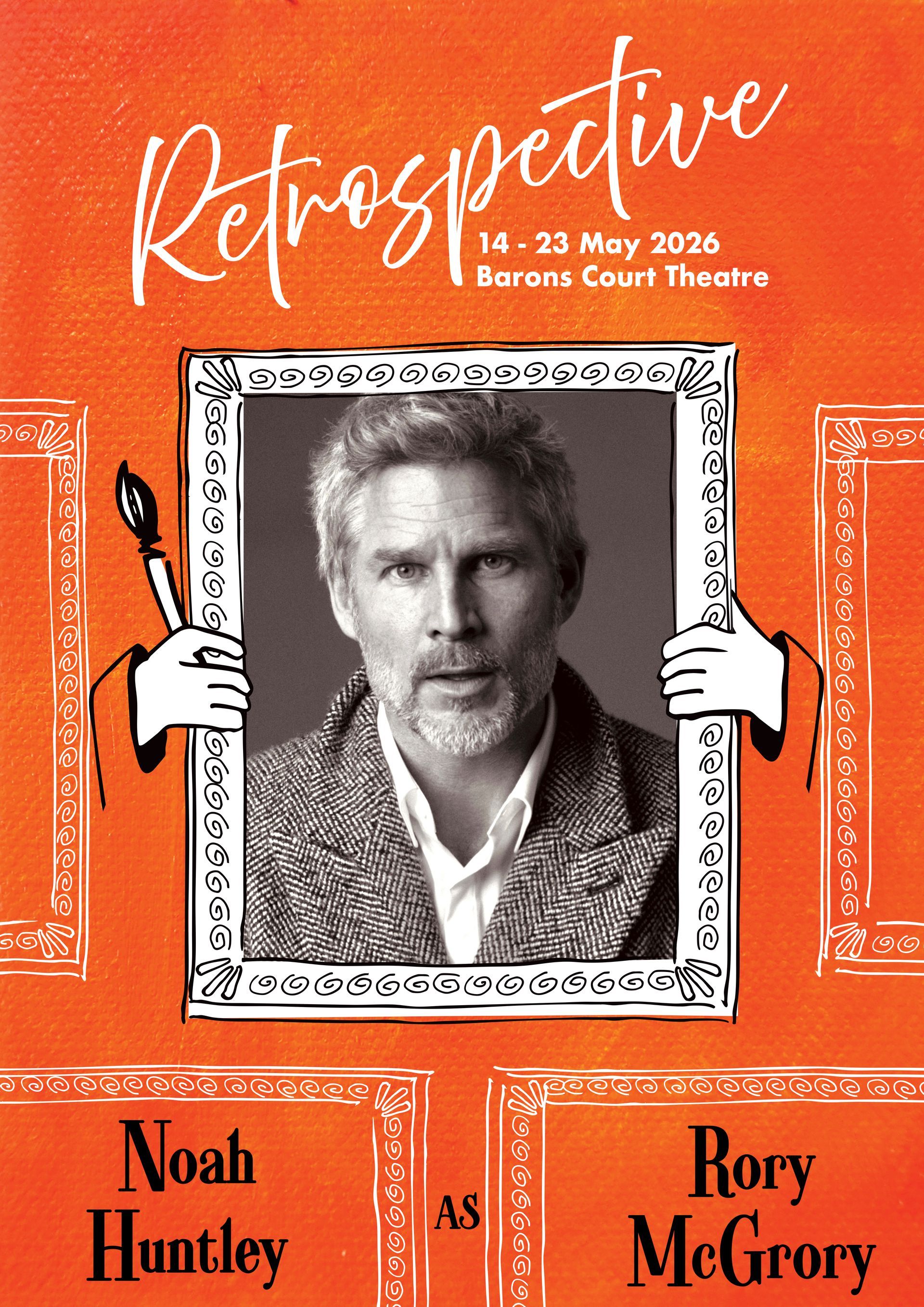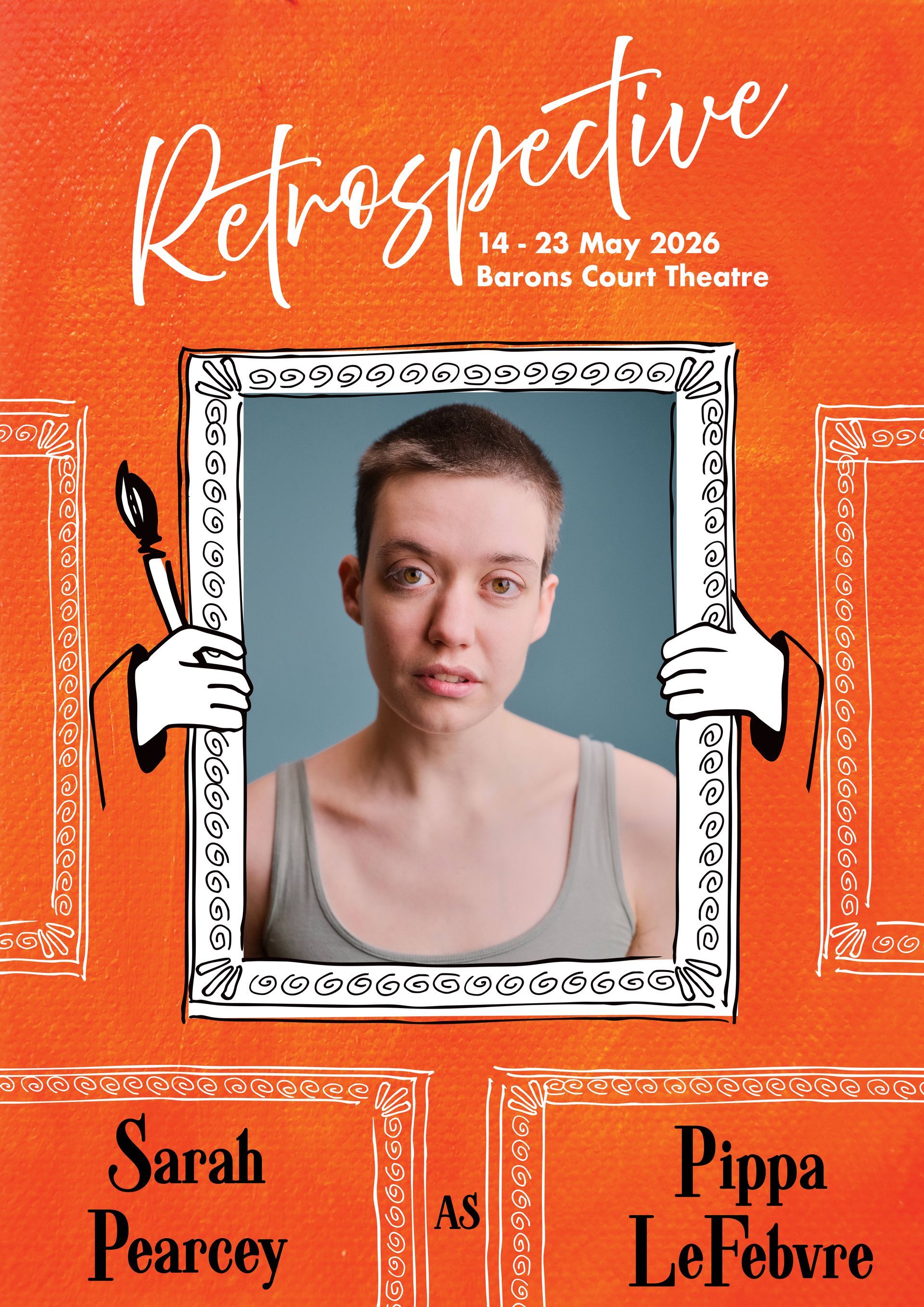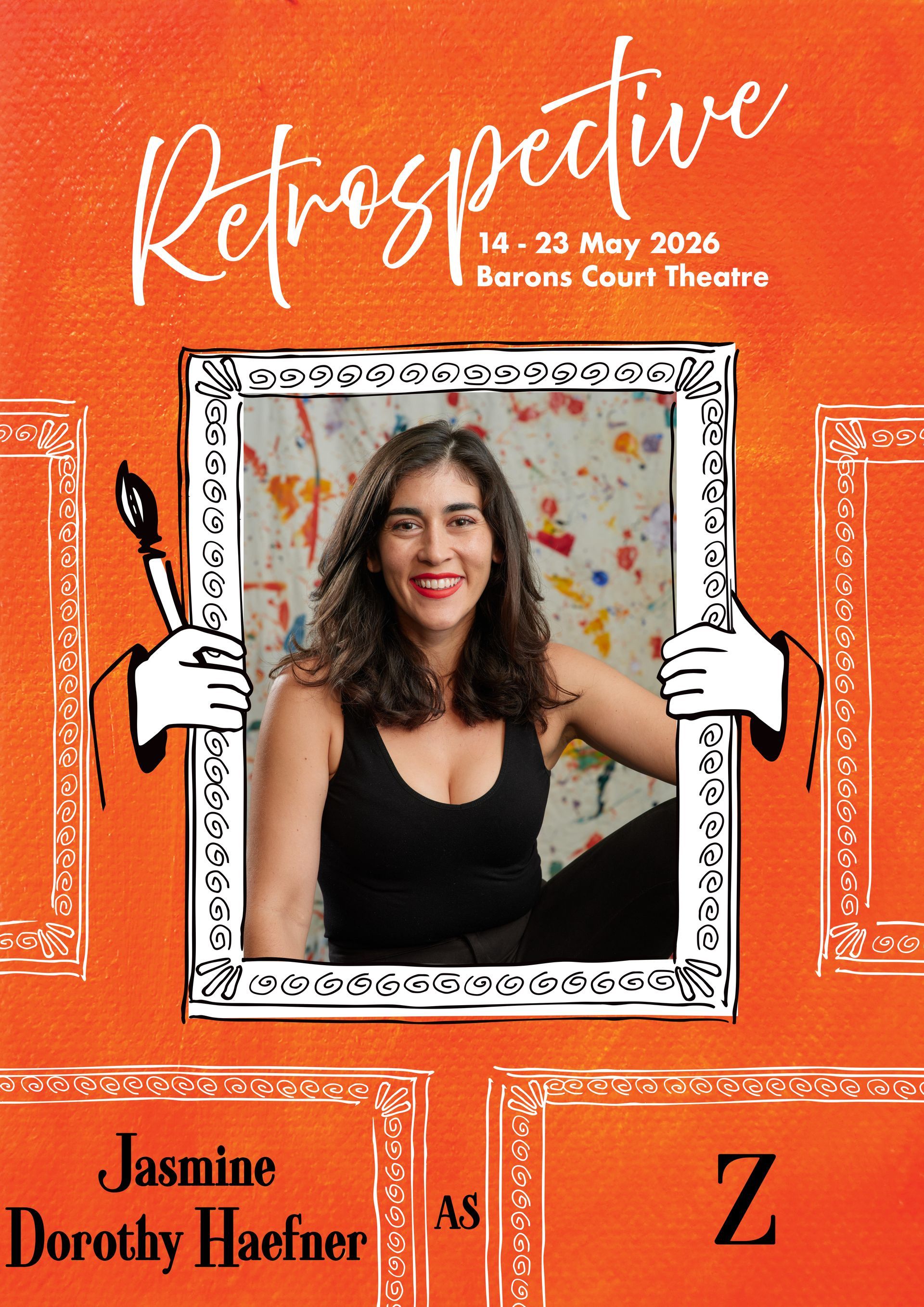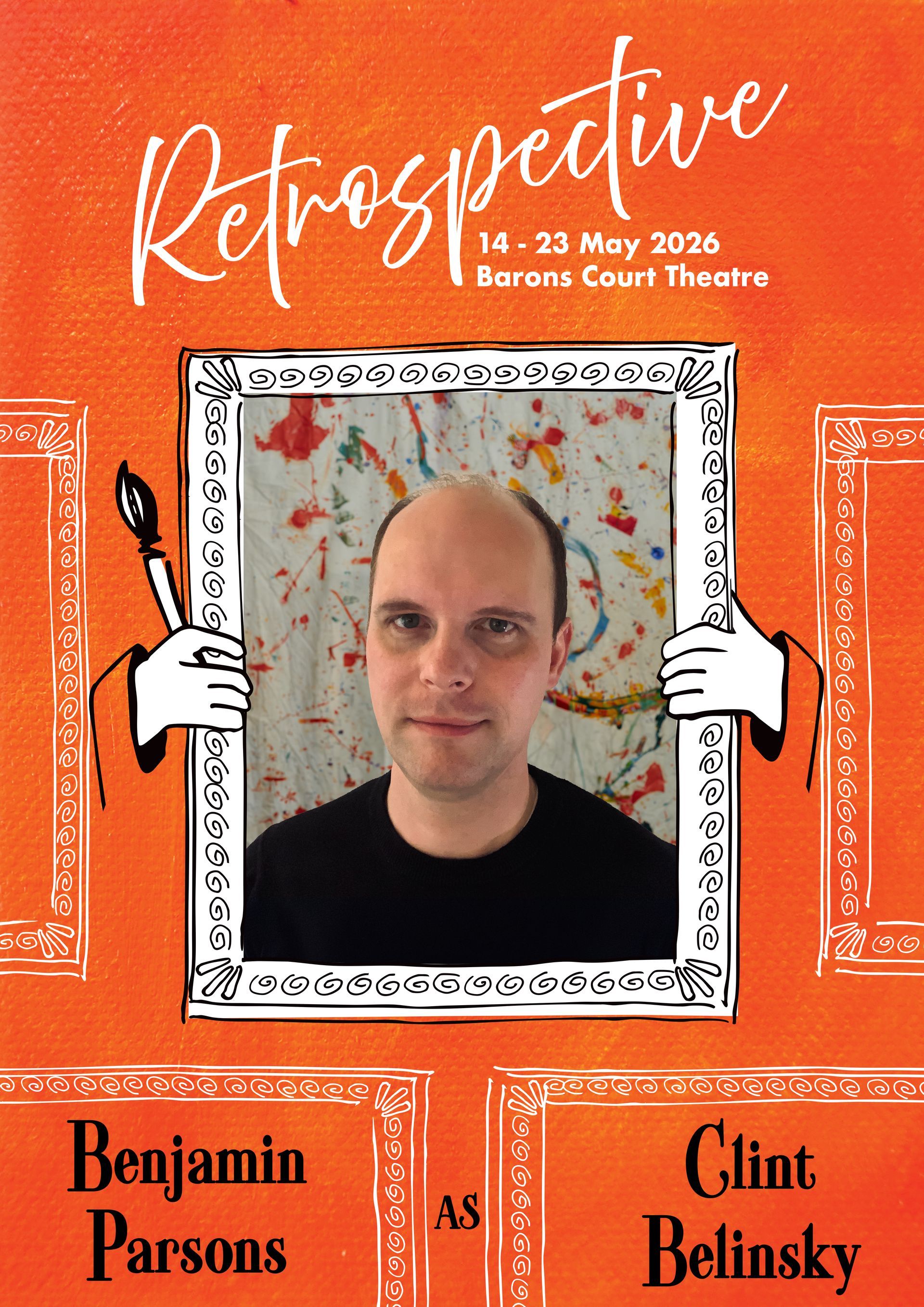


INTERVIEW with playwright T.J. Elliott and director Liviu Monsted on RETROSPECTIVE coming to Barons Court Theatre 14 – 23 May
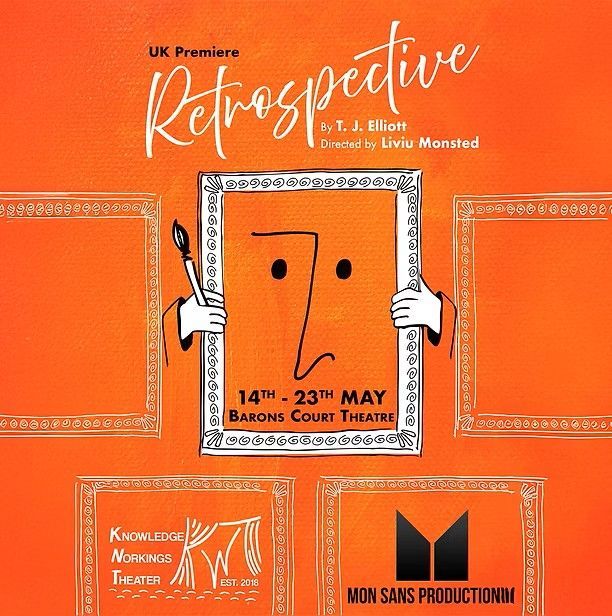
RETROSPECTIVE by T.J. Elliott finds a painter (Noah Huntley) awakening in a gallery of empty canvases and encountering his dead ex-wife and two old ‘frenemies’. Dream or afterlife? That answer comes with laughter in the UK premiere of Broadway Bound Theatre Festival's critically acclaimed comedy.
INTERVIEW WITH T.J.ELLIOTT
Hello T.J. Firstly could you tell us about the inspiration behind the play.
The short answer is Rothko, Murdoch, and Luck.
First, Mark Rothko: I had some familiarity with him because my late father-in-law knew him pretty well. And then in 2024, almost by accident, I went to two Rothko Exhibitions in the space of a few months. They both had lots of didactic text on the walls, all of this writing about his paintings, which disturbed me because it distracted from the powerful effect of those works. Touring the second show, I said to a friend, “God, I bet Rothko would hate this.” And he replied, “You should write a play about a painter coming to a retrospective of his life’s work and hating the curatorial comments.” Well, most painters are very specific about how their work should be displayed so the only way that scenario could unfold to a painter like Rothko (and our painter is definitely not Rothko) would be if he were dreaming. Or dead. And in either case, what if some other people showed up with whom he had unfinished business?
Second: Iris Murdoch. Around the same time, I was reading a brilliant book.
Metaphysical Animals by Clare Mac Cumhaill and Rachael Wiseman about Iris, Elizabeth Anscombe, Mary Midgley, and Philippa Foot, all of whom studied philosophy at Oxford in the late 1930s and early 1940s. I had read Murdoch's novels, but new to me was her concept of unselfing, “a gladsome relaxing of the spirit, of our essential nature, into the shared pulse of existence.” Could that be the unfinished business? Then the BaaderMeinhoff Phenomenon took over and everything encountered seemed to be about attachments and unfinished business. For example, this mystic Jesuit (a paradox, I know) Father Anthony de Mello shows up on my screen with this passage, “There is one thing and only one thing that causes unhappiness. The name of that thing is attachment.” Attachments as unfinished business for this painter who is angry at being in this situation with these people added up to comedy for me.
Third, Luck: having that friend tell me there’s a play in all this at the same time that I'm reading this book about Iris Murdoch followed up by then finding collaborators who believed in making the text come alive like Jasmine Dorothy Haefner (who reprises her role here in London from our New York run), and Liviu Monsted who has such a good feel for directing the play.
You describe your writing as attempts at truth telling via ‘problem comedies’. Are there particular problems that you are addressing in Retrospective.
We called them problem comedies because our plays had a text that provokes discussion and (we hope) understanding of issues and ideas such as race, religion, ideological polarization, and the enigma of human attachments. The comedies part is best summarized in an aphorism attributed to George Bernard Shaw that “If you want to tell people the truth, you’d better make them laugh …”
In RETROSPECTIVE, the problem is the struggle that we have of letting go of certain attachments — slights, grudges, needs —that (dare I say in ‘retrospective’) are insignificant compared to the treasures of love, nature, and art. We seem to be looking at our lives through a malignant microscope much of the time, focusing on these little dramas and missing the monumental meaning and pleasures around us.
What power do our attachments in the form of resentments and grudges have especially if we cannot release them even in an afterlife — if there is one? That’s the play.
Could you tell us a little more about your own ‘world view’
What an interesting question! I believe there is something more than this world and have called ‘it’ God, but the rest is way beyond my understanding. In my world view (in this worryingly out of whack world thanks to certain despots) kindness matters massively. Keeping that in mind means that seeing people as the sublime souls they are is critical even when their behaviors, even their unkindness, makes that a challenge. Iris Murdoch’s view to “give attention to nature in order to clear our minds of selfish care” matches my thoughts, but I want to make sure that we include people in our definition of nature. That starts with the people closest but should radiate to everyone we encounter. Finally, I believe creating art is what our souls demand, but ‘art’ in the broad OED definition, “The expression or application of creative skill and imagination.” For me that means plays that make people laugh while they think and think while they laugh.
As a writer of comedy, could you tell us a little more about your brand of humour.
My dual citizenship — Ireland and USA — shaped my brand of humour. The Irish part from Flann O'Brien, Brian Friel, Wilde, and Shaw is enchanted with word play, thorny themes, and fanciful twists. The American part stems from The Marx Brothers, George Kaufmann, Robert Benchley, and definitely my four times co-playwright Joe Queenan: broader satire that can get quite physical. Tom Stoppard and Alan Ayckbourn (whose guides taught me how to practically put all these pieces together in a play) combine these strands nicely and I flatter them both with my earnest imitation.
RETROSPECTIVE, your ninth production, was critically acclaimed at its premiere at New York’s Broadway Bound Theatre Festival last year. What attracted you to bringing the play to London?
Besides London being the center of the English speaking theatre universe and the paragon of diversity in playwrighting and acting? A London production is a dream of every playwright writing in the English language, right? Having had the luck to be here many times and always attending pub theatre, I’m over the moon at the chance to be part of this world. While my plays have enjoyed success Off-Broadway and regionally in the States, there’s something about venues like the marvelous and innovative Barons Court Theatre and its very vibrant audiences that furnish a rare opportunity for a playwright. I met their Executive Director Leo Bacica last year and after an hour together knew that RETROSPECTIVE would fit well in a space with a reputation for presenting daring plays.
INTERVIEW WITH DIRECTOR LIVIU MONSTED
Hello Liviu, when you read T.J.’s script what were your first thoughts about the play?
I immediately thought to read the work again, and I did, I read the work three times. I found it thematically dense and mechanically rich, a work that needs reflection.
Could you tell us about your approach to directing theatre.
I think of theatre as a film trapped in wide a shot, I focus a lot on how to fill the frame with movement and then aim to find moments of catharsis that the audience and performers share. The rehearsal process is a balance of creating specific vignettes that linger in my mind and allowing an organic discovery of character beats with the cast.
As rehearsals are already underway, how do you keep the balance between hard work and rest?
I don’t. By all accounts coming to London to do this collaboration with “Mon Sans Productions” and “Knowledge Working Theatre” is in a sense a holiday for me. To focus entirely on the creation of a piece of theatre is all the rest I could want.
If you have a favourite scene or line in the show, could you tell us about that.
The play acts out as one scene that escalates and shifts as characters come and go, my favourite segment is certainly close to the end, as the chaos subsides and the truth behind our protagonists suffering comes to the forefront, its a captivating bit of character work.
If you have to choose one of the characters that you empathise with, which one would it be and why?
A great tell of the writings strength is that I find moments of empathy with all the characters, but I would definitely point to Pippa, the deceased ex wife of the protagonist. She has a complicated relationship with her self worth that I empathise with.
Finally, could you tell us something about sound, lighting and set and how these are being used to give a theatrical experience.
I have a fascination with this online trend of liminal spaces, A place that feels familiar and yet alien, a space between our memories. Our set is very liminal, blanks canvases pose questions for characters and audiences alike. We also use formless voices that echo throughout the play, these voices are tied directly to dynamic lighting that I was inspired by “Close Encounters of The Third Kind”. Needless to say, the show is visually strange and captivating use of the “Barons Court Theatre".
RETROSPECTIVE is at Barons Court Theatre 14 - 23 May 2026