

MATTHEW LYON on his metadrama PLAYER premiering at Riverside Studios 11 - 31 May
Matthew Lyon's new play is doffing its cap to Berkoff's Actor. Player is a black-comedy told partly through soliloquies, partly through skits - on the trials and tribulations of one frequenting that oldest of all professions (no, not that one!) - Acting.
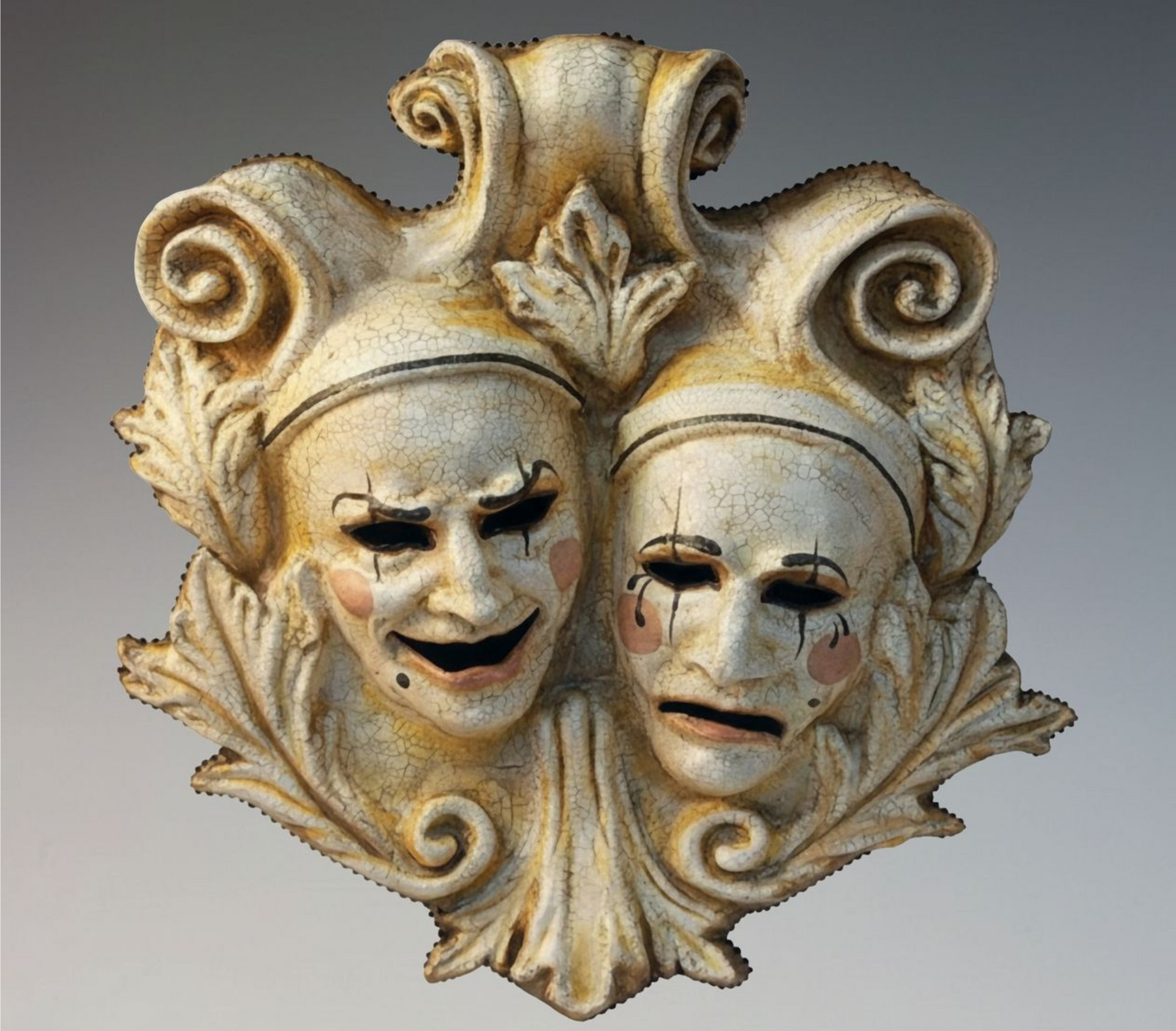
'the unemployed actor, audition-bound and going over their lines one last time is that most tragic of figures...'
LPT: Hello Matthew, we were all very taken with your last play, BROKEN, which crystalized your name as a writer of bold comedy. You describe your work on both Broken and Player as 'expressionistic satire, written in verse'. How did you develop this form of writing?
Matthew Lyon: Not long after I came out of drama school I auditioned for and got a part in a Berkoff play called West. Prior to this I'd known very little of Berkoff's work (apart from Metamorphosis, which a former drama teacher had once raved about) and nothing at all about his 'London plays' (East, West, Greek etc). I remember being completely blown away by the mash-up of Shakespearean language and cockney rhyming slang. It was this mix of the profound and the profane, the beautiful and the guttural, the poetic and the punk. Like a ballerina in Dr Marten boots. It made me think of people like Tom Waits or Ian Dury and of course - Anthony Burgess' Clockwork Orange. Once I'd read West I immediately devoured everything else that he'd written in this style and I knew very soon after that I wanted to write something similar. This was how my first show; 'Broken', came about.
You’ve mentioned that Player is doffing its cap to Berkoff’s Actor. Please could you tell us a little more about this.
Berkoff has a one-man show called Actor which involves a character endlessly walking on the spot whilst delivering a monologue to various people he passes in his day-to-day life. Family members, friends, fellow actors - with everyone he passes he is putting on his best face whilst simultaneously masking the frustration and despair (and at times envy) of failing to get to where he's trying to get to in his profession (whilst sometimes seeing others surpassing him). The themes of the show are very familiar to all actors and I wanted to write something in a similar Berkoffian style that spoke of things I had encountered as a young actor.
As an actor yourself, how far did this help you with the scriptwriting?
There were things that I wanted to comment on that instantly informed what certain scenes would look like. Initially I had started out writing Player - as with 'Actor' - as a solo show, but perhaps through fear of delivering a solo or perhaps through enjoyment of writing duologues (or both) I ended up making the show a two-hander. Thoughts I had about the class system within my profession, about the more base-level aspects of actors personalities (smiling in each others faces whilst stabbing each other in the back), the occasional tyranny of drama teachers and the way the government views (for 'views' read 'disregards') those pursuing creative professions were all things that from the off I wanted to comment on. And of course the dreams we all have as actors of 'making it' vs the fact that 95% of us are unemployed at any one time.
There is a certain poignancy to the ‘unemployed’ actor featured in your play, but some humour too. Why do we laugh at sad things?
In the midst of sadness or some negative event I think we often DONT laugh - we are too close to whatever is happening, but with the benefit of time we're usually able to look at the event and see that it really wasn't that big a deal after all (like looking through old diaries). If it's a big enough grief that it leaves a permanent scar I think we instinctively laugh as a coping mechanism. It's a way of transmuting something that we originally thought might kill us. Like growing beautiful flowers from manure. Everything contains its opposite, so tragedy always leads to comedy.
Your first play premiered at White Bear Theatre in 2015 but you’ve had runs of several other shows of yours at different venues since that time. Is it important to choose the right theatre for your work (and what is the ‘right’ theatre)?
In the early days of putting your work on I'd say it's more important to find A theatre for your work, regardless of whether it feels necessarily like the right one or not. You just want to get your work on and seen and get a sense of what you need to do throughout the process of staging a show. The question of finding the right theatre also entails whether that theatre feels they are right for you. If you do not write the kind of shows your preferred choice of theatre stages you might not be right for them (and visa versa). Equally if you DO write the kind of shows they stage but you have limited production values/marketing budget you still may not be right for them. If you have the option of one theatre over another then yes, there are certainly theatres that might cater more to your type of writing/show, with audiences that would reflect this. My plays are all comedies so I have for some time felt they'd work really well at, for instance; The Soho Theatre. I am also local to the Bush Theatre, so have a good sense of the shows they put on and audiences in this area. Sadly, a lot of theatres that may seem right for your show are a lot less accessible now than they once were. You may simply be filling in an anonymous submission form when sending them your work, rather than writing an email to a specific person (as was once the case).
What has been your major high, and have there been any really low moments?
Playing Edinburgh with my first show 'Broken' was a high for me. I'd performed in West by Berkoff at the fringe in 2002 and I had fallen completely head-over-heels in love with the festival as a result (I've been back as a viewer every year since then) and so to bring a show of my own to the festival 14 yrs layer in 2016 was a real joy. I was also in an on-again, off-again relationship with my actress throughout our time at the festival (and my play is about a break-up!) so this high was simultaneously also a low for me (be careful what you write about!). Beyond this, some real highs have been some of the lovely reviews my shows have received, particularly one that was very beautifully written by a fellow actor and writer (and a very talented one too, I later saw a brilliant solo show by her about loneliness called 'Jake') who used to review for London Pub Theatres. Bringing Broken to the Riverside Studios for a professional run was also a high for me, after years of trying to take it off the fringe circuit! Another low has been times when my shows havent made any money and in some instances have actually lost money due to outgoing costs that weren't exceeded by ticket sales (but this is fringe theatre for you!).
If you had to choose, which comes first for you, the writing or the acting?
I wrote a solo show about writing and being a writer called 'A Small God' where I said that if I was a stick of rock and you snapped me in half it would say 'writer' running through the middle of it - that pretty much sums it up. I wrote before I acted and I think I'll always write, even if I stop acting. The most pleasure I get when putting my shows on is in hearing what my fellow actors do with the things I've written and in hearing what reviewers or audience members make of the writing. If people like my acting too - great, but it's people's enjoyment of the writing that moves me most. I'm also more introverted than extrovert - so sitting alone with a pen and a pad is more my natural habitat than treading the boards under bright lights.
Images: Matthew Lyon and Ola Forman in rehearsal
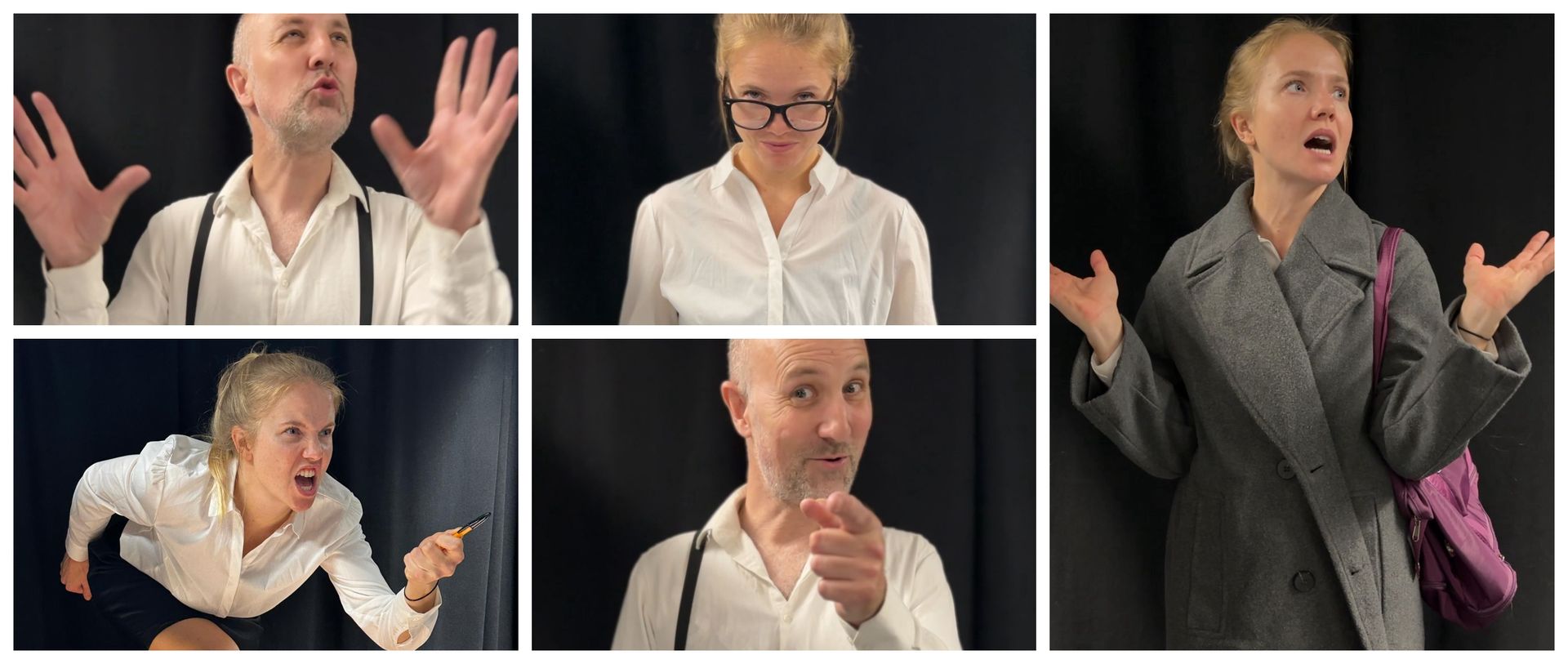
Of course, you’re also the director of Player. Being so close to the writing does this offer any challenges for you and how do you overcome them?
The main challenge can be that I may have a fixed idea in my mind about how I want a scene to look or sound, when there may be other ways of playing it that I havent considered. Because I cast my own shows I do trust my actors to chime in with their ideas and so sometimes ('sometimes' being the operative word!) I may go with something they have come up with that I hadnt previously considered. Also, my actors will occasionally do things with their lines which I hadnt expected - which can be a nice surprise and act as a reminder to me to be open to interpretation and less dogged/stubborn about how something should look/sound.
Equally, what do you feel are the benefits to being a multi-hyphenate and are there any people doing this in your profession, beyond Berkoff, who you take inspiration from?
Two of my favourite film-makers of all time - Charlie Chaplin and Woody Allen - both took/take on multiple roles when making movies and both came to do this out of necessity - namely because too much involvement from other people was screwing up their writing (and comic writing too, so the jokes were not landing at all when they had other directors on board). Although obviously on a much smaller scale - I had also found this with directors I'd worked with on my own shows (not all, but most). There is a musicality to comedy and if you dont hear it then it doesnt work. As a writer in the room with the director you then have two choices - you speak up or you keep your mouth shut. I cant do the latter. One of my favourite quotes on directing is "95% of good directing is casting" and I definitely feel that. The problem I found was that even though I'd cast my own shows, once I got a director on board they'd often lead the actors in the opposite direction from where I'd seen the actors intuitively take the writing in their auditions with me. I'm a big believer that 'too many chiefs spoil the broth' and whilst it is a big challenge fulfilling multiple roles on a show it does mean that you can serve your own vision as a writer. It means that you can (ideally) create a much narrower gap between what's in your head and what's happening on stage. I often find the television that I love the most - The Sopranos and Euphoria, to name two examples - has creators who have taken on multiple roles. It is clear when watching the end credits and seeing their names come up again and again that these shows are literally their babies. There was not a single element of The Sopranos, for instance - from how shots looked, to dialogue spoken, to products people were using on screen - that David Chase did not have final say on. And I believe that's why these shows worked so well.
We’re pleased to see that your co-star is Ola Forman, and we wondered whether you had worked with her before and what made her the perfect choice for the role?
I had never worked with Ola before. I did not know her from Adam. I think she'd added me on Instagram at some point due to a friend of hers being in Broken with me last year and whilst I was holding auditions for Player she actually sent me a message (upon seeing the flyer on my page) and asked if she could audition for the show. She was cycling around New Zealand at the time and seemed to be covering a lot of miles per day so my presumption was that her reading for the show probably wouldnt come to much as a.) I couldnt see how she could learn two speeches in the midst of a long-distance bike-ride(!) and b.) I have never (and didnt intend to) cast a play just on a self-tape. I also had, by the time I received her tapes, three other actresses in mind for the role and was just trying to decide which of those I should cast. But her tapes were brilliant and I could instantly see how natural she was with comedy. So it was really a no-brainer. And as with everything I cast it seemed very fated and serendipitous (someone always appears laterally when I am casting shows, I never work with who I think I'll work with!). It's a real joy to hear what she is doing with the lines each day in rehearsals and I know people are going to absolutely love her in this show.
You’ve become the master of the two-hander. Can you tell us what is different or special about working on a duologue?
I have always loved snappy, back-and-forth dialogue. Whether it's Fitz and Penhaligon in Cracker by Jimmy McGovern or Tony and Carmela in The Sopranos or any other number of TV shows or movies or theatre shows I've seen in my life. The fun that can be had with the word-play in a duologue is bouncing off your fellow actor with something that tops their line. Then having them top your line and so on and so fourth. I used to be a big Hip Hop head and there is a tradition of this in rap, known as 'rap battles' - where two rappers try to outdo each other lyrically. And, of course, Shakespeare did this in multiple different plays that he wrote. In a solo show you dont have anyone to bounce off (well, you're bouncing off your audience but its not the same) and with three or more characters there is a dilution of that back-and-fourth quality. The doubles are fun but watching Djokovic and Alcaraz is more exciting!
Final question, when writing Player, were there any scenes that are particularly poignant or personal to your own experience?
Although it is done in a very clowny, cartoony way - the scene in the job-centre harks back to a time in my younger years when I wasnt working and the job-centre was forever trying to steer me away from my acting aspirations towards a 'proper job'. Likewise, though I have made the drunk mum character very comic-book/fall-down drunk, I did grow up with an alcoholic mother who was very disparaging and belittling about my desire to be an actor. The Edinburgh Fringe Festival has been a big inspiration to me as a writer and a theatre-maker (all the best shows I've ever seen have been at the festival) and so (though I take the piss out of it in this show. Easily done!) the scene that talks of the festival was also personal to me.
PLAYER is at Riverside Studios 11 – 31 May 2026
BOX OFFICE https://riversidestudios.co.uk/whats-on/mL-player/