

LPT HORROR SEASON 2026
Welcome to LPTM'S Horror Season
by Annie Power
For October 2026, we’re trying something a little different. With three horror and gothic theatre festivals taking place across London, we’re bringing together reviews, interviews, behind-the-scenes features and audience led awards. Let's explore the capital’s darker stages together.
on this page
1. After Dark Interviews
This week it's the Turn of ETCETERA THEATRE
2. Reviews
The review are coming in!
3. Behind the Scenes
BEHIND THE SCREAMS
How do you scare an audience with one performer?
THE PEOPLE BEHIND THE FEAR
Three horror makers on how fear actually works
4. Audience Awards cast your votes!
Follow on Instagram @pubtheatres1
- AFTER DARK
In the first of our After Dark festival profiles, we head to Camden’s Etcetera Theatre to meet the team behind Camden Horror Fest and talk small spaces, big scares, bloodstain removal as Tuesday admin, and how horror has found a natural home above a Camden pub.
Horror may have its monsters, ghosts and things that go bump in the night, but running a horror festival involves rather more practical concerns: programming shows, supporting artists, selling tickets and, occasionally, working out how to clear fake blood, body parts and sets in the five minutes before the next show begins.
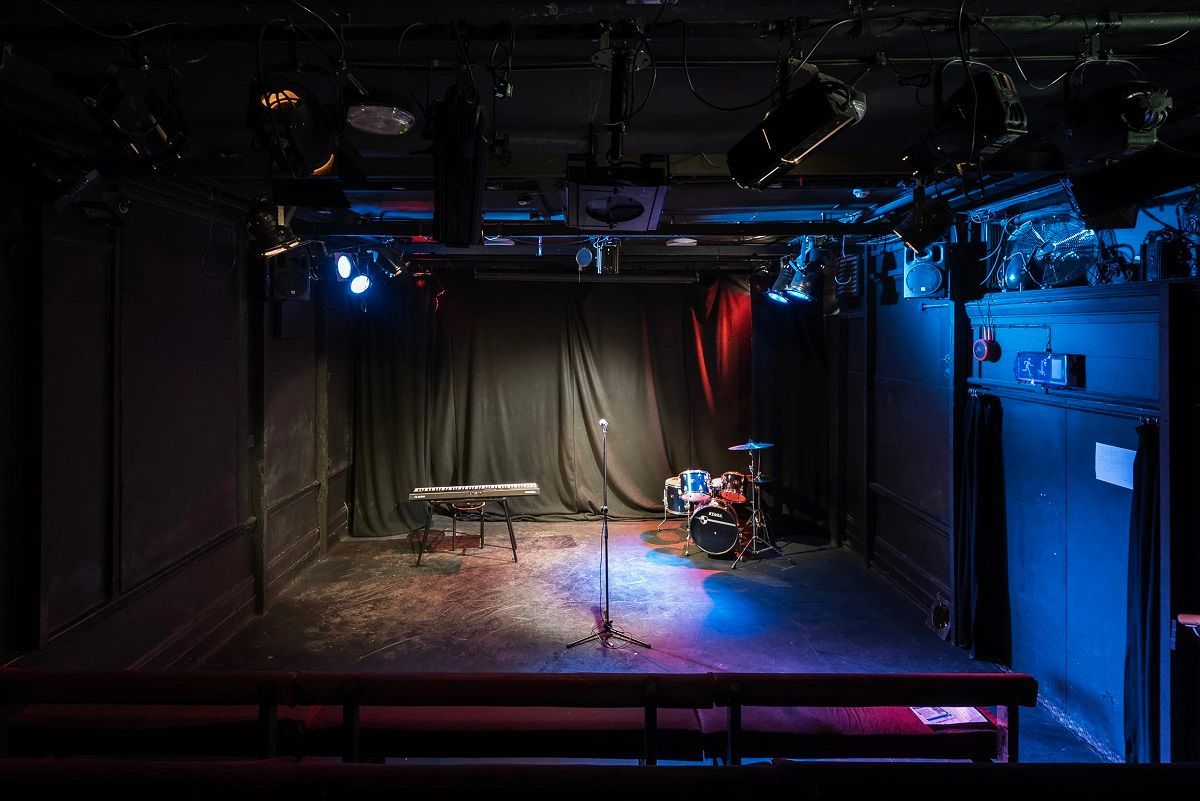
For London Pub Theatres’ Horror Season, After Dark goes behind the scenes of the festivals giving horror theatre a home. We begin at the 42-seat Etcetera Theatre, where organisers Otto and Martyn are preparing for Camden Horror Fest.
NOWHERE TO HIDE
Camden Horror Fest began with a simple observation: horror already seemed to belong at the Etcetera.
A small black box above a pub already possesses an underground ambience. Add darkness, an audience sitting within a few feet of the performers and a genre built around making people wonder what might be lurking just beyond their line of sight, and the room begins to feel less like a limitation and more like an invitation.
For Otto and Martyn, that closeness was part of the initial appeal.
“Horror works brilliantly here because the audience is close to the performers, there is nowhere to hide, and every sound, silence and movement becomes part of the atmosphere.”
But the ambition was broader than finding a good room for ghost stories. They also saw a gap for a London theatre festival able to accommodate horror in all its forms.
“Horror is such a flexible genre. It can be frightening, funny, political, surreal, emotional, or completely strange.”
Camden Horror Fest was created to give those different kinds of work a home.
HORROR, BUT NOT AS YOU KNOW IT
It’s not just about the number of times it can make somebody leap out of their seat. Otto and Martyn look for atmosphere, a strong theatrical idea and, crucially, a sense that something is at stake. That leaves the door open to everything from slashers and ghost stories to folk horror, body horror, gothic monologues, psychological work and dark comedy.
Two productions in this year’s programme illustrate just how broad that definition can be.
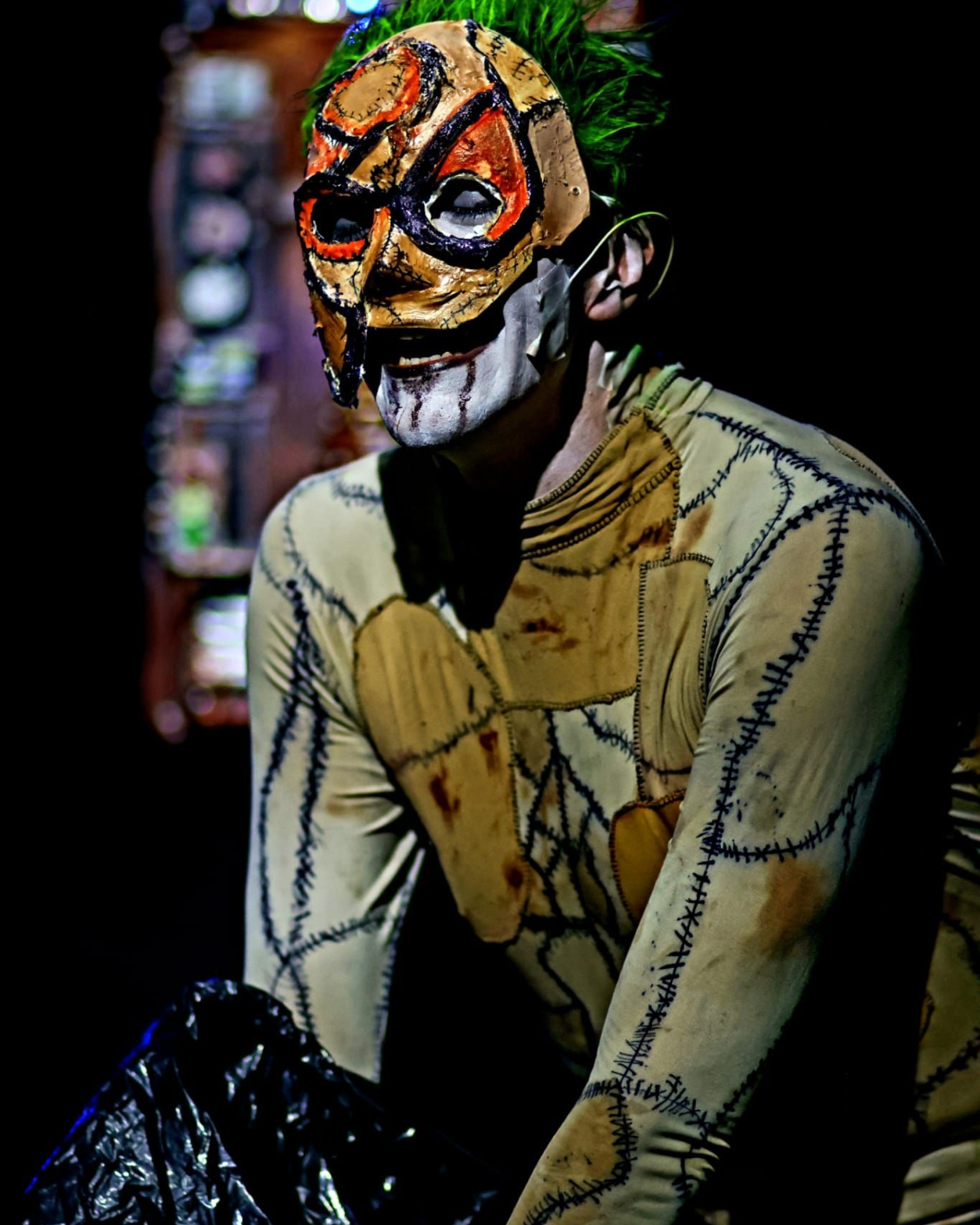
I’M NOT MYSELF TODAY: A VILLAINOUS CABARET
I’M NOT MYSELF TODAY: A VILLAINOUS CABARET is a hybrid cabaret and one-man show that begins with an eccentric child’s fascination with fictional baddies, from Cruella de Vil to Dick Dastardly. The show gradually turns towards the rather more frightening territory of reality, as classism, violence and questions of culpability blur the line between villain and victim. Songs and dark humour give way to an increasingly surreal solution: a machine designed to break down cruel reality and remix it into manageable fiction.
Images above: Simon Shaw in I'm Not Myself Today (Photo credit: Joey Brace).
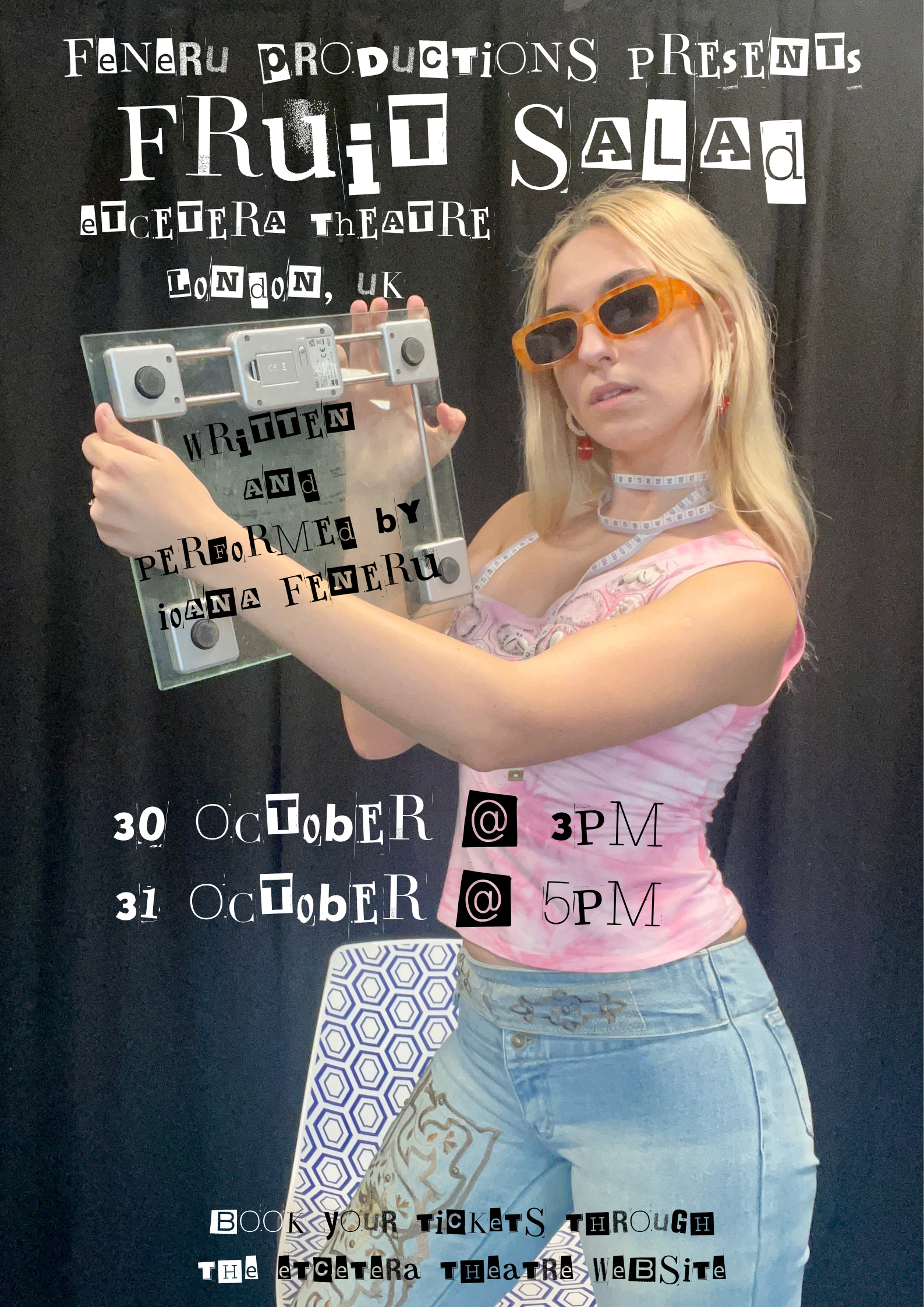
FRUIT SALAD
FRUIT SALAD takes a very different route into horror. The darkly comic psychological horror solo performance follows a young woman whose childhood fixation with food, numbers and rules develops into something increasingly sinister. Fruit and calorie counts give way to beauty, punishment and the impossible mathematics of being “good enough”, as childhood memories bleed into the present and her carefully constructed logic begins to unravel. Its horror lies not in monsters or ghosts, but in the disturbing consequences of learning to measure your own worth.
They’re very different propositions, but that is rather the point - horror doesn’t have to mean ghosts in a creepy mansion or someone hiding behind a door. Sometimes the thing frightening us is much more mundane and recognisable.
What matters is that the work feels alive on stage. Otto and Martyn are interested in artists who treat the practical restrictions of fringe theatre not as obstacles but as part of the creative language of the production.
“We like work that feels bold, committed and specific.”
HORROR UP CLOSE AND PERSONAL
Film can tightly control what we see. The camera directs our eye, editing decides when information is revealed and a well-timed soundtrack tells us when we should start worrying.
Theatre has something unique.
Presence.
“Live theatre makes horror immediate,” Otto and Martyn explain. “The audience can hear the actor breathing. They can feel the silence before something happens.”
Ordinary objects can become sinister. “A chair in the wrong place, a blackout, a whisper, someone standing too still, a door that should not open.”
None of this requires a huge budget. “Sometimes the audience’s imagination does most of the damage.”
At the Etcetera, small choices can carry enormous weight: a movement can feel menacing, a quiet line threatening, a glance enough to implicate an audience member.
“In a larger venue, horror can become spectacle. In a small venue, it becomes personal.”
The flexibility of the room also matters.
“It can become a bedroom, a basement, a séance room, a memory, a nightmare, or something much stranger.”
The horror doesn’t have to overwhelm the room - it only needs to get under your skin.
I can attest to this. The Etcetera’s relationship with horror predates Camden Horror Fest. The venue was once home to the London Horror Festival, where I first encountered live horror theatre. One production, inspired by the circumstances surrounding Mary Shelley’s writing of Frankenstein, still haunts me. The company transformed the tiny black box into a mad scientist’s laboratory, with the creature coming to life mere inches from me amid crackling circuitry, sparks, smoke and flashing lights. That proximity created a tension I’d never experienced while watching horror on screen. It felt as though I could reach out and touch it - or rather, that it could reach out and touch me.
It was genuinely terrifying.
WHAT DOES THE CAMDEN HORROR AUDIENCE WANT?
Being scared is the obvious answer, but Otto and Martyn see it more broadly. “I think audiences want to feel something strongly.”
That could be fear, tension, shock, laughter, discomfort, curiosity or sadness. Horror audiences don’t necessarily need to be terrified every second, but they do want a production to commit to its world.
“The best shows understand the rhythm between dread, release, surprise and atmosphere.”
That breadth also creates a particular challenge when it comes to programming the festival.
As Otto and Martyn explain: “Horror can mean so many things to different artists. Some companies come with very traditional ghost stories, others bring comedy, experimental performance, psychological work, physical theatre, or something closer to cabaret or live art. The challenge is to make space for that variety while still making the festival feel like a clear event with its own identity.”
For Otto and Martyn, the reward is seeing what artists do with the space. “There is something very satisfying about watching a small room transform completely because a company understands atmosphere, timing and audience imagination.”
There is a larger ambition behind it too: making space for a genre they feel can be underestimated. “Horror has always been deeply theatrical, and it deserves to be taken seriously as live performance.”
BRINGING A HORROR SHOW TO CAMDEN
For companies arriving at the festival for the first time, Otto and Martyn’s advice is straightforward: “Be clear about what experience you want the audience to have.”
In an intimate space, every choice matters. As they point out, that includes “the sound, the lighting, the pace, the first image, the final moment, how the audience enters the room, even what they see before the show starts”.
They also stress the importance of being specific about what you’re offering. “Don’t just say ‘horror show.’ Tell audiences what kind of horror it is. Is it gothic? Funny? Psychological? Supernatural? Bloody? Queer? Historical? Experimental?”
Horror audiences know there are many sub-genres. Telling them which particular nightmare you are offering makes it easier for them to find you.
And a festival appearance need not be simply another performance slot. Otto and Martyn encourage companies to invite reviewers, gather images and audience responses, meet other artists and think about the show’s future beyond Camden.
BLOOD, GORE AND TUESDAY ADMIN
Naturally, running a horror festival also comes with administrative questions not faced by every arts organiser. As Otto and Martyn put it: “One of the strangest parts of running a horror festival is how quickly the unusual becomes normal. You find yourself having very practical conversations about blood, screams, props, bodies, ghosts, knives, coffins, rituals, fake wounds, unusual liquids, and whether something can be safely cleaned before the next show.”
“In another context that would seem completely unhinged,” they admit.
At Camden Horror Fest?
“It’s just Tuesday admin.”
And then there are the clichés.
Asked which horror trope should be allowed a well-earned rest, they nominate the “it was all a dream” ending, particularly when it removes the consequences of everything that came before. There is, however, apparently some room for negotiation if it is “done with a very sharp knife”.
Another staple may also have had its moment.
“Not every creepy child needs to sing slowly in the dark. The creepy child union has had a very strong run.”
THE FUTURE
Otto and Martyn want Camden Horror Fest to grow into a proper annual platform for the genre: somewhere companies, writers, comedians, solo performers and experimental theatre-makers can bring ambitious work to an audience actively looking for it.
They hope to develop greater press and industry involvement, audience awards, late-night events and stronger links between participating artists.
Ultimately, the aim is as much about identity as expansion. They want Camden Horror Fest to become part of the theatrical calendar: a festival audiences anticipate, artists seek out and London’s fringe scene recognises as a home for horror.
There is something pleasingly appropriate about that ambition. Horror has always been good at taking an ordinary place - a house, a hotel, a tent, a lake - and making it feel as though something extraordinary might happen there. Camden Horror Fest is attempting much the same thing with a black box theatre above a pub.
Although perhaps not with a creepy child singing slowly in the dark.
2. REVIEWS
The first review is in (click on title to read the review)
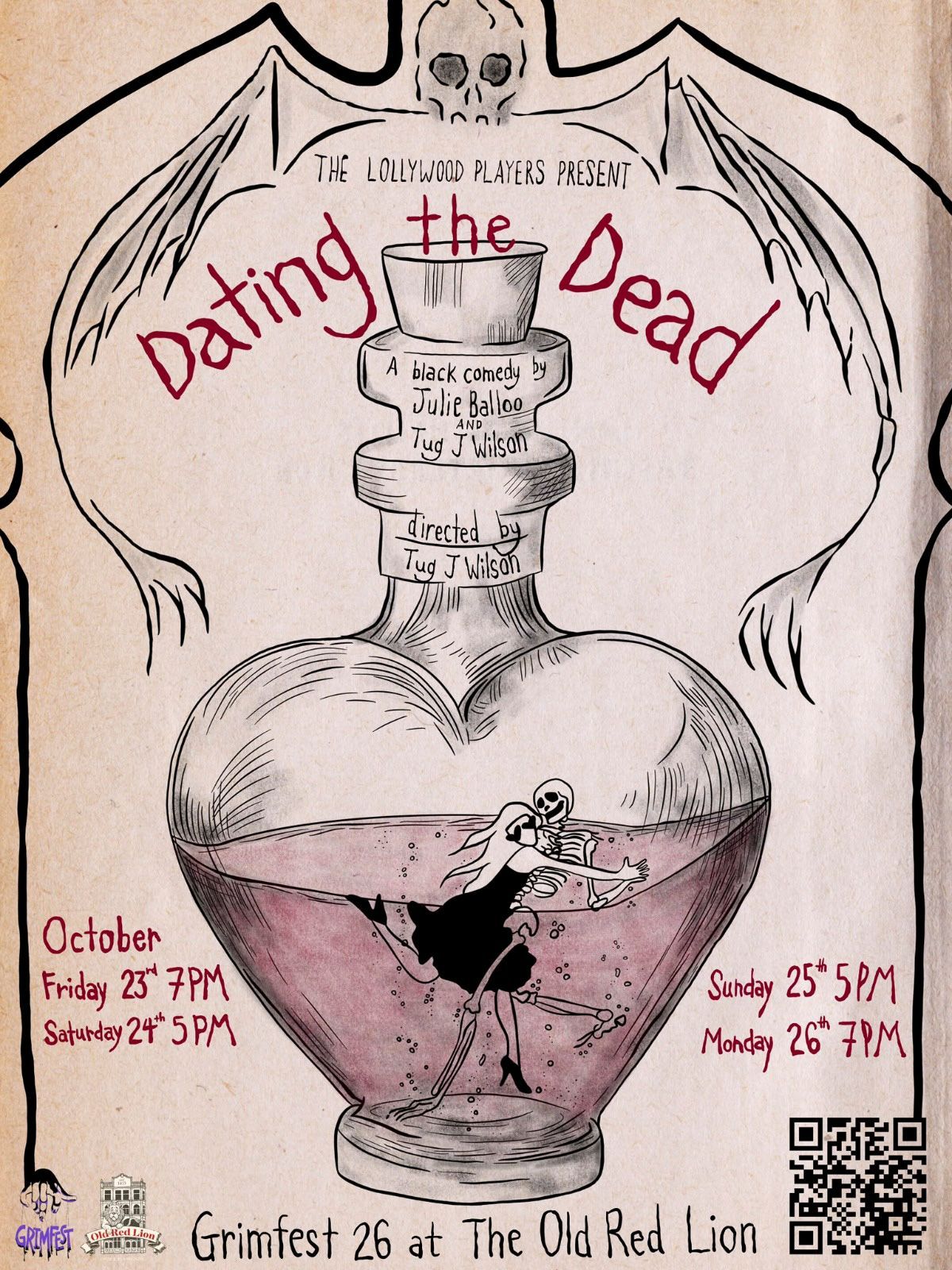
LOVETT by Lucy Roslyn at Bridewell Theatre 24 – 26 October 2026
‘a veritable miracle elixir of tragedy and comedy’ 👻👻👻👻 Spine chilling
FATHOM at The Hope Theatre 5 - 7 October 2026
‘An adaptation with strong creative lineage drowning under its own weight’ 👻👻 A bit eerie
JUDGMENT DAY at Old Red Lion Playhouse 22 September – 10 October 2026
‘Gripping, like watching a runaway train closing in.’ 👻👻👻👻 Spine chilling
MARA at the Hen & Chickens Theatre from the 9 – 11 October 2026
“Interesting concept, but Mara falls into the trap of becoming repetitive.”
👻👻
A bit eerie
3. BEHIND THE SCENES
BEHIND THE SCREAMS: How do you scare an audience with one performer
When there is nobody else on stage, where does the threat come from? We talk to solo horror-makers about invisible antagonists, unpredictable audiences, contorted bodies and why one performer is more than enough.
A performer walks onstage alone. There are no other actors to react, interrupt or take over while a behind-the-scenes trick is prepared. For horror, that presents an obvious problem. Fear thrives on anticipation. On the suspicion that somebody - or something - might be just out of sight. So what happens when the audience knows there’s only one person up there?
For writer-performer Polis Loizou, whose solo work includes YOU OUGHTA BE IN PICTURES and I WAS A TEENAGE BISEXUAL, it undoubtedly makes the job tougher.
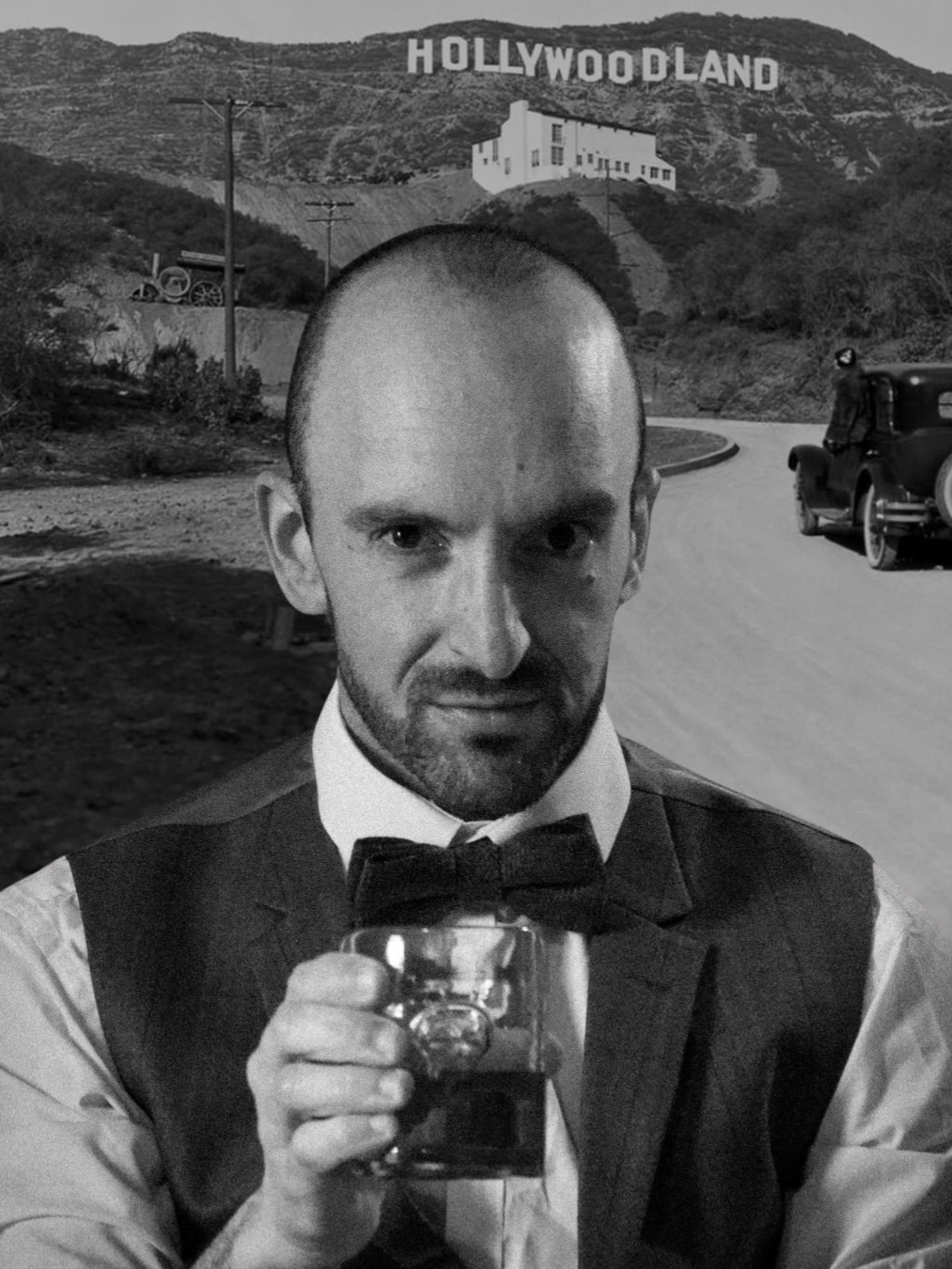
In YOU OUGHTA BE IN PICTURES, Polis turns to 1940s Hollywood, playing a notorious film director auditioning a young actor for a horror film whose previous lead mysteriously died, gradually drawing him into a world of exploitation.
“It’s just harder to build and sustain that necessary tension,” he says. “You don’t have anyone to bounce off, and threat doesn’t feel as immediate.”
Harder, though, does not mean less effective. In I WAS A TEENAGE BISEXUAL, Polis plays roughly twenty characters and, at one point, has to fight himself.
Alice Mayer, writer-performer of HOURGLASS, takes a different approach. Rather than playing the other characters herself, she performs opposite a cast of disembodied voices.
HOURGLASS follows Charlie, a young woman whose exes keep dying and who begins to find power in a curse that may make her considerably more dangerous than she first appears.
“The only thing you get to rely on is the strength of your own storytelling,” Alice says.
Perhaps the first rule of solo horror, then, is not to apologise for there being only one person on stage. It’s to make that person feel like an entire cast.
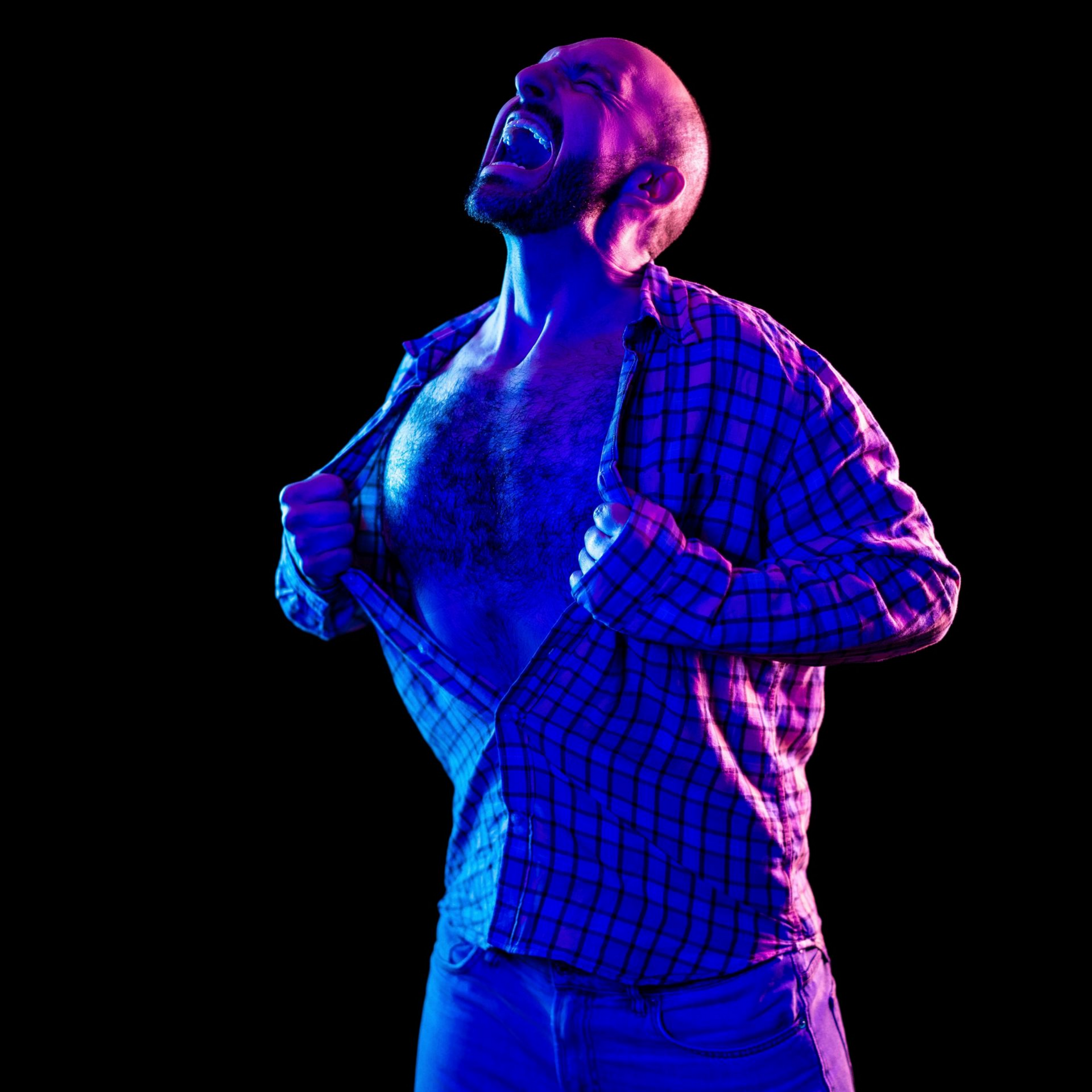
Images:
Polis Loizou in I WAS A TEENAGE BISEXUAL
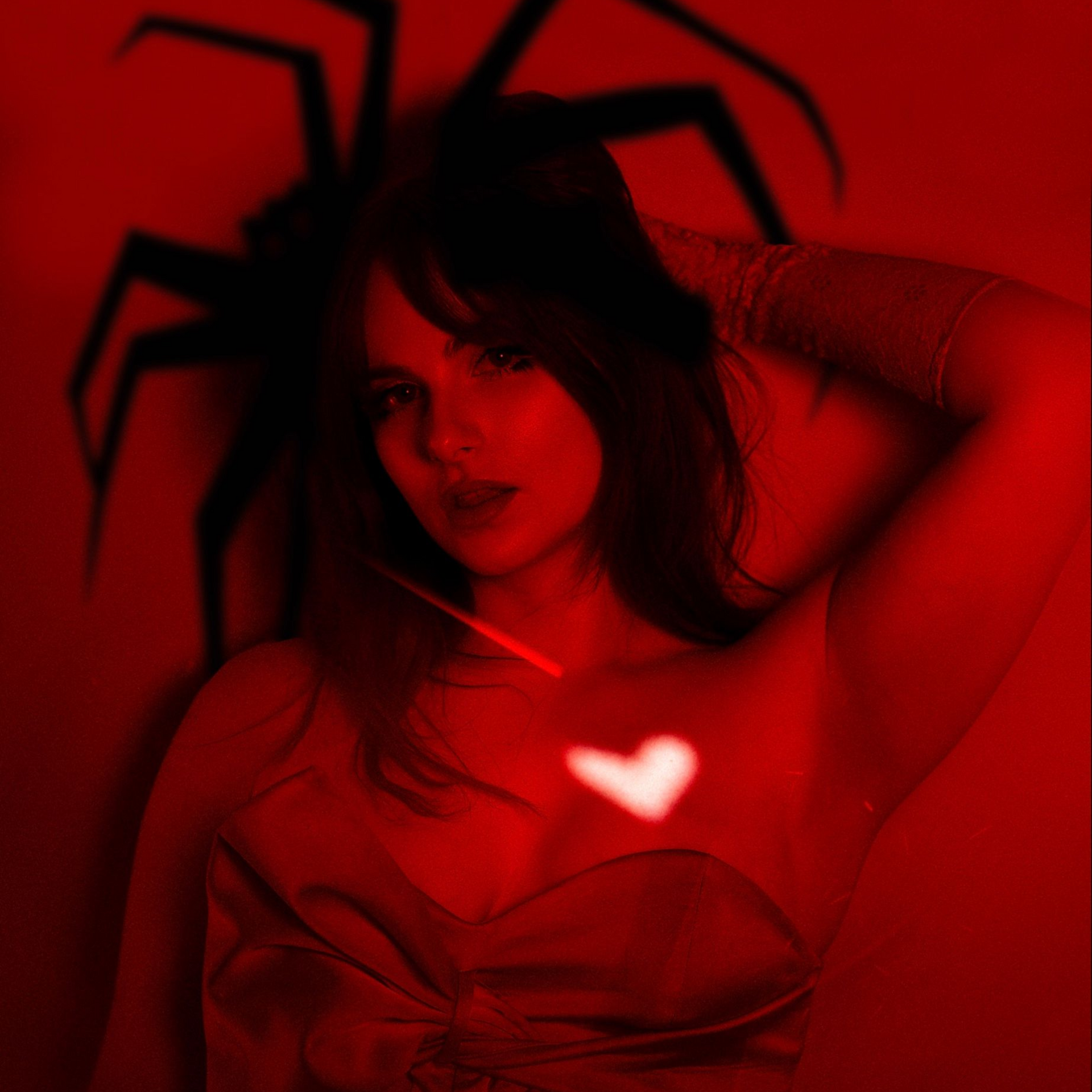
Alice Mayer in HOURGLASS
THE UNSEEN MONSTER
Horror doesn’t need to put the monster in front of us.
Polis prefers to let the audience complete the picture themselves. Subtle changes in physicality or vocal inflection can suggest an unseen presence. In YOU OUGHTA BE IN PICTURES, the idea is complicated further: his protagonist is the threat to somebody the audience cannot see.
In HOURGLASS, the uncertainty lies partly in Charlie herself. She may be an unreliable narrator.
“Your audience’s mind is your greatest tool, especially in solo theatre,” Alice says. “Is she this sweet girl who has bad things happen to her, or is she a mass murderer? That decision is in the audience’s hands.”
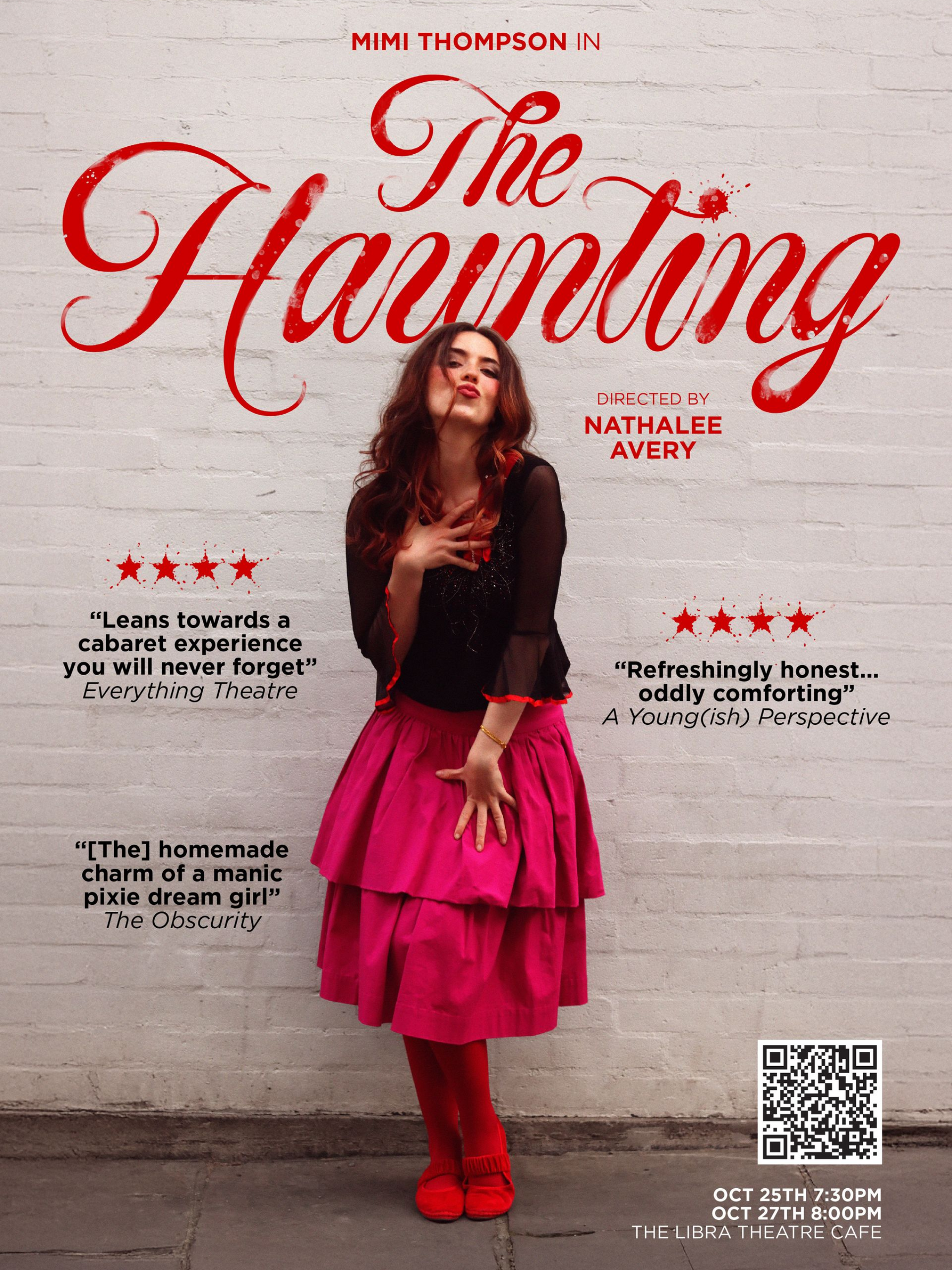
For writer-performer Mimi Thompson and director Nathalee Avery, creators of THE HAUNTING, the threat comes from somewhere different. Thompson plays Mimi, who is being haunted by her period. Every month she receives instructions sealed in blood which she must obey in order to stop the bleeding; when the demands escalate to kissing her best friend’s boyfriend, the one-hour solo horror-comedy follows the repercussions of this decision.
Rather than drawing out the anticipation, they keep the show deliberately fast-paced. Mimi is constantly moving, with props and costumes appearing throughout.
“Since they can’t predict the next thing to happen to her, the possibility suddenly emerges that a threat might suddenly leap out from a curtain, from the audience, from behind Mimi,” they explain. “The possibility becomes the antagonist.”
That may be one of solo horror’s great advantages. Remove the visible threat and almost anything can occupy the empty space - a prop becomes suspicious, a dark corner becomes inhabited, silence becomes menacing.
Polis is emphatic about the value of withholding information: “Don’t show everything and never over-explain. Uncertainty is one of the key drivers of fear.”
THE HAUNTING similarly asks its audience to contribute imaginatively. Mimi narrates much of the story and frequently uses mime, turning the limitations of a small-scale fringe production into part of the theatrical language. Thompson and Avery describe it as a challenge to the audience: can a solo performer on a minimal set persuade you to enter this world and be frightened by it?
Horror has always understood this principle well. Show us the monster and we can assess it. Leave the door closed and we can invent something far worse.
HOW MUCH TECH DO YOU NEED?
There’s no single answer.
Polis has tried both extremes. I WAS A TEENAGE BISEXUAL uses video, sound and changing lighting states to create a cinematic world large enough to hold its many characters. YOU OUGHTA BE IN PICTURES, on the other hand, strips almost everything away: Polis, a chair, a fake glass tumbler and one lighting state.
In that piece, it’s precisely the sparseness - and the acknowledgement of theatrical falseness - that makes the experience uncomfortable.
HOURGLASS is at the other end of the scale. Alice performs against a single 45-minute track, interacting with pre-recorded actors as though they are in the room with her. Different sound states, music and silence help create the world around Charlie, alongside puppetry, food and, naturally, severed body parts.
Timing is unforgiving.
“If I mess up, the whole show messes up,” Alice says.
Meanwhile, THE HAUNTING also takes a maximalist approach. Props were part of Mimi’s thinking from the start, while sound became another way of populating the space. Multiple voices are absorbed into a soundscape which, in a small theatre, can become almost oppressive.
The lesson seems less about whether solo horror should be technically elaborate or stripped bare than whether the theatrical language belongs to the story.
One performer can occupy a cinematic landscape; another can have little more than a chair.
Both can be frightening.
WHEN THE BODY BECOMES THE SPECIAL EFFECT
Without another actor to redirect our attention, the performer’s body becomes extraordinarily important.
Polis maintains that surprise doesn’t require a new physical element suddenly appearing. A sharp increase in volume, a jump, or even a creeping realisation passing across somebody’s face can be enough to catch an audience off guard.
His multiple characters in I WAS A TEENAGE BISEXUAL are built through specific movements, poses and voices. One town-hall sequence requires him to switch rapidly between ten characters, changes that have become instantaneous through repetition.
Even a small alteration in voice or posture, he argues, can become unsettling.
For THE HAUNTING, physicality is crucial. Towards the end of the show, Mimi’s body itself becomes part of the horror. Thompson took a contemporary dance course while developing the show, exploring the limits and possibilities of her movement.
One key moment has her fold herself into an uncomfortable, contorted position. At first, it looked faintly comic. So she and the director made it last longer. Then she began to move, slowly.
The longer they stretched the moment, the more disturbing it became. Audiences subsequently identified it as one of the show’s most frightening scenes.
Alice also begins HOURGLASS with physical transformation, using a short movement sequence in which Charlie grotesquely stretches into a spider.
She admits that, as an audience member, watching one performer dance can make her uncomfortable. So she uses that discomfort.
“I commit to it and then when the piece snaps to reality, it causes people to laugh and then they’re immediately on your side.”
Sometimes the difference between funny and terrifying is simply refusing to stop.
Images:
Mimi Thompson in THE HAUNTING
Polis Loizou in YOU OUGHT TO BE IN PICTURES
TOO CLOSE FOR COMFORT
Small fringe venues may seem difficult places to hide theatrical tricks, but they’re also particularly well placed to frighten people.
For Alice, that intimacy recalls something much more basic: hearing a frightening story at a sleepover and lying awake afterwards.
“You have to trust audiences to use their own imagination.”
Polis wrote YOU OUGHTA BE IN PICTURES specifically for the Cinema Room at Edinburgh’s Banshee Labyrinth. The intimacy intensifies the claustrophobia and allows an audience to see tiny changes in his face that would disappear in a larger auditorium.
THE HAUNTING similarly uses proximity to its advantage. Its audience is involved throughout, with those closest to the action unable to retreat from what’s happening in front of them.
But proximity also alters the relationship between performer and audience.
A solo actor has no colleague on stage to absorb an unexpected laugh, cough or badly timed reaction.
Mimi draws energy from those responses and sometimes acknowledges an unexpected laugh before returning to the story. Thompson and Avery see that responsiveness as part of building a stronger connection with the room rather than pretending the audience isn’t there.
Alice is equally dependent on the people in front of her.
“My show lives and dies by audience reaction,” she says.
A particularly large laugh or gasp can alter her timing, forcing her to speed up or slow down while still keeping the show locked to its pre-recorded track.
Polis remains aware of the room too, subtly altering his performance around its energy.
The audience may not have lines, but they are the other people in the scene.
ONE PERFORMER, MANY HATS
There is also a less glamorous reality to solo performance - if something needs doing, there’s only one person available to do it.
The ending of THE HAUNTING asks Mimi simultaneously to move props, deliver dialogue, interact with the audience and change costume. Thompson and Avery knew from the beginning that the sequence would be difficult and rehearsed it repeatedly to prevent any practical activity from draining the scene of energy.
DOES IT ACTUALLY WORK?
And then there is the question every horror-maker eventually has to confront: is any of this actually scary?
Alice’s answer is admirably concise.
“You don’t. You hope.”
One encouraging indication so far? Her favourite reaction to one of the show’s scares: “An old woman clutching at her pearls.”
For Polis, development begins with the simplest test: “Do I find this creepy?”
Beyond that, fear is subjective. A moment that unnerves one audience member may leave another completely untouched. His default position, he jokes, is to assume he is boring everybody until they tell him otherwise.
Thompson and Avery brought in an audience early in the process, holding a feedback session after a dress rehearsal. Unexpectedly, most people wanted to participate more.
Rather than shrinking away from the threat, they wanted to move closer to it.
Which perhaps speaks to the strange appeal of horror theatre.
An audience buys a ticket knowing that somebody intends to make them uncomfortable.
Then they walk into a dark room and help them do it.
ALONE, BUT NOT REALLY
A solo performer may not have another actor to bounce off, a visible antagonist or somebody else to help carry the scene, but they’re not really alone.
“I don’t feel alone,” Alice says. “I’m in a room full of people.”
Then there are the lighting and sound design, the set, props and costume. The character created through a change of posture or voice. The thing behind the curtain that never emerges.
And there is a willing audience filling every empty space with possibilities.
Asked what they would need to frighten a room if restricted to one performer, one prop and one lighting state, Thompson and Avery reply: Mimi, a torch and red light.
With the right show, that’s enough.
After all, as Polis puts it: “Feel the fear yourself, and they’ll feel it too.”
END
THE PEOPLE BEHIND THE FEAR: Three horror makers on how fear actually works
What does it actually take to frighten an audience in a theatre? From a carefully placed silence to a 3,000-cue technical system, LPTM Horror Season meets some of the people building fear live. How do you make someone afraid when they’re sitting in a theatre surrounded by other people, perfectly aware that the person apparently having their teeth pulled out a few feet away is an actor?
Everything has to feel immediate - the performer has to sustain the fear, the sound cue has to be perfectly timed, the lighting change has to happen at precisely the right moment. Perhaps that precision is exactly what makes theatrical horror so interesting.
A successful scare belongs to a team: writers, performers, the director, sound, lighting and set designers, technicians - and, ultimately, the audience.
For Horror Season, we spoke to theatre-makers behind three very different fringe productions - THE MAN WHO THOUGHT HE WAS A BABOON (performing at Drayton Arms Theatre, Kensington), MARA (Hen & Chickens Theatre, Islington) and SURVIVE THE NIGHT (The UnDisposables at Old Red Lion Playhouse, Islington) - to find out how the machinery of fear actually works.
STARTING POINT
Somi De Souza, playwright, director and performer of THE MAN WHO THOUGHT HE WAS A BABOON, starts with character. “We have to see them in their normal state before anything has happened,” she explains. If an audience is going to fear for somebody, first they have to care what happens to them. In BABOON, Hugo is living a quiet life with his wife, Summer, when a substantial inheritance changes everything. Drawing on a secret shame from his childhood, Summer and the newly arrived village doctor begin carefully convincing him that he is a baboon.
De Souza describes the play as psychological terror: “a slow removal of boundaries, a dismantling of the character’s sense of reality”. There are no monsters waiting in the wings. The horror comes from watching something recognisable - apparently good intentions curdling into something darker.
MARA approaches horror differently. Newly pregnant and racing to a make-or-break custody hearing for her eight-year-old daughter, Mara becomes trapped in the basement of an office building as panic rises and the line between memory, fear and reality begins to blur. Director and co-writer Eirini Konstantinidou sees the shared physical space between performer and audience as an opportunity to spread Mara’s fear beyond the stage. Through performance, sound and lighting design, the production aims to make the audience share Mara’s claustrophobia and terror of being trapped as the clock ticks down. The aim is for fear not simply to be observed - but to become contagious.
Meanwhile, SURVIVE THE NIGHT takes a very different route, handing part of the responsibility for what happens over to the audience themselves.
PLAYING WITH FEAR
There is an awkward practical problem with acting petrified night after night - and that’s that the cast knows what’s coming.
For De Souza, the answer lies in rhythm and precision. She thinks of a play almost musically, with pauses, silences, beats and changes in pace carrying meaning alongside the dialogue itself. “There are no special effects,” she says of BABOON. “All we have is the dialogue and the right actors to hit those notes.” In stripped-back theatre, there is nowhere for imprecision to hide. A glance held for slightly too long, a pause before an answer, the way one character occupies the space around another - tiny choices suggest a shift in subtext beneath an ordinary conversation.
Angela Peters, who plays Mara, takes a deeply personal route into the character’s psyche. She draws on memories of feeling trapped herself, asking what happened physically and mentally in those moments and then transferring those emotional responses into Mara’s circumstances.Movement and stillness become part of that process. In a play where one performer occupies the stage for long periods, Peters and Konstantinidou found that constant intensity would become exhausting. The audience needs moments to pause and breathe. Those changes of rhythm don’t release the audience from the tension - they allow the tension somewhere to go before it begins building again.
SURVIVE THE NIGHT complicates the problem further because sometimes its performers genuinely don’t know what’s going to happen next. Six teenagers are stranded in a creepy cabin in the woods, while the audience makes choices that determine how the story develops. The UnDisposables’ interactive horror draws on classic slasher films and survival video games. Sometimes audiences are given time to deliberate, while at other moments they’re rushed into a choice - and, like the characters in any good horror franchise, learn the hard way that bad decisions have consequences.
CLOSE QUARTERS
For horror theatre, a tiny room can be a remarkably useful thing.
THE MAN WHO THOUGHT HE WAS A BABOON takes place within an already claustrophobic world: a small village, a tiny cottage and an increasingly isolated couple. At the Drayton Arms, the audience is close enough to see what De Souza calls every “side glance, every discomfort, fake smile”. Those details might disappear in a larger auditorium. Here, they become evidence. The set reinforces the confinement: a three-sided sculpted backdrop enclosing the action, predominantly black with a white zig-zagging path across the floor. There is no blood or gore. The pressure is psychological.
At the Hen & Chickens Theatre, Peters sees a similar advantage for MARA. When an audience is only feet away, it can see the fear in the performer’s eyes. More importantly, it can see that she needs help they cannot provide. “There is something quite special about a small intimate space when the premise of the story is that you’re trapped in a building and can’t escape,” she says.
Meanwhile, at the Old Red Lion, SURVIVE THE NIGHT uses intimacy for another purpose. The UnDisposables want spectators to become a collective rather than a group of strangers occupying neighbouring seats. The smaller room helps create a sense of collective experience, where the audience is not merely witnessing the story - it’s partly responsible for it.
THE UNSEEN
Sometimes withholding something from the audience is more effective than putting it directly in front of them. Moments of eerie silence can be nerve-wracking - whether in anticipation of something about to happen, or the chilling moment after it has. What you don’t hear can be as effective as the most frightening sound effect.
De Souza prefers suggestion. Let an audience hear something without seeing it and they’re forced to complete the image themselves. “They are participating in the creation of the piece,” she says. Give the imagination enough information and it will happily do the rest.
Sound is central to MARA too. Konstantinidou describes it as “very primal”. Working with sound designer Lefteris Douros, she has created an almost ever-present soundscape designed to support the character’s increasing sense of entrapment.
SURVIVE THE NIGHT goes further: its villain is entirely unseen, heard only through voiceover and effects, leaving the audience to decide what is lurking beyond the visible world of the play. Sound designer Tom Triggs created an original soundtrack drawing inspiration from horror films and video games, and because the show contains branching timelines, some of that work may never even be heard during a particular performance.
3,000 CUES
Fear may feel instinctive, but creating it is an exercise in precision. In BABOON, lighting helps direct the audience through Hugo’s changing psychological state. Spotlights isolate moments and characters, fades suggest the passage of time, and bold changes of colour signal that something has shifted internally without requiring it to be explained. De Souza is particularly conscious of the damage a mistimed cue can do. If poor sound or lighting knocks an actor out of the moment, the audience is likely to fall out of it too. Precision becomes part of the performance.
Konstantinidou and lighting designer Matty Arakcheev use light differently in MARA. Rather than simply concealing things from the audience, they manipulate what can be trusted. As Mara’s own perception becomes increasingly unreliable, lighting helps blur the distinction between what is happening and what she thinks is happening. Darkness and shadow become part of the uncertainty.
Then there is the sheer complexity of SURVIVE THE NIGHT. Behind its choose-your-own-adventure structure sits a QLab system containing more than 3,000 sound, AV and live-feed cues. Audience votes are made through a web app, which feeds into the production as the story branches in real time. QLab stores previous decisions as “story state variables”, allowing choices made earlier in the show to have consequences several scenes later.
During the production’s “quick time events”, the separate elements have to converge within seconds. The web app technician opens and closes the vote. The audience makes its decision. AV and sound move onto the correct cue stack. Lighting and sound indicate the outcome to the performers, who then need to know which piece of script they are now playing - and all of this plays out within ten seconds. Fortunately, the technology is reassuringly reliable. “The fear of our laptop unexpectedly shutting down is probably the greatest horror we face,” the company admits.
AUDIENCE ENTERS STAGE LEFT
After all the writing, rehearsing, designing, programming and cueing, one element remains stubbornly impossible to programme: the audience.
De Souza finds audience silence particularly revealing. Laughter in the expected places gives actors energy and helps create a reciprocal relationship between stage and auditorium. But during a tense scene, “pin drop silence” is what allows performers to sculpt the fear.
For The UnDisposables, audience reaction is even more fundamental. “Audience reactions are everything in SURVIVE THE NIGHT,” they say. Without them, there is no show. The spectators vote, debate, laugh, object and collectively decide a character’s fate. What the company wants the audience to take away is not simply the memory of being frightened but the feeling that, for an hour, a roomful of strangers made something happen together.
Which brings us back to the question we started with: how do you frighten somebody who knows they’re sitting in a theatre waiting to be frightened?
You write a character they care about. You place that character in danger. You choose what the audience sees and, just as importantly, what it doesn’t. You build the soundscape that suggests something terrible is about to happen. You decide when the light disappears. You rehearse. You programme the cue. You wait until precisely the right moment… and then you trust the audience. Because however carefully horror theatre is constructed, nobody can completely control what happens when the lights go down.
BOOK THE SHOWS HERE
MARA – The Hen & Chickens Theatre – 9-11 October
Box Office: https://unrestrictedview.co.uk/events/mara
SURVIVE THE NIGHT – The Old Red Lion Theatre – 15-17 October
Box Office: https://weareoldred.co.uk/whats-on/grimfest/survive-the-night/
THE MAN WHO THOUGHT HE WAS A BABOON – Drayton Arms Theatre – 27-31 October
Box Office: https://www.thedraytonarmstheatre.co.uk/baboon-2
4. AUDIENCE AWARDS FOR HORROR SHOW, CAST YOUR VOTES HERE
We’re putting the decision in your hands. Throughout the festival season, audiences will be able to vote for their favourite productions and moments across all three festivals, including:
Best Death
Best Jump Scare
Best Twist
Most Inventive Use of a Prop
Keep an eye out for the voting link and have your say.
FOLLOW THE HORROR SEASON ON INSTAGRAM @pubtheatres1
New reviews and features will be added throughout October, so check back regularly for the latest coverage. LPTM’s Horror Season is an experimental editorial feature for October 2026, and we’ll see where it takes us … For now, dim the lights.